
Why Online Casinos Check a Player’s Location
Moving from one town to the next is usually nothing more than a change of roads, but for a player trying to load up online casinos, that same move can flip the lights off without warning. For a related account reference, mino casino can add useful context. For someone who runs into this for the first time, it is tempting to search for an explanation like the one found through , only to find that the answer has little to do with the account itself. What actually prompts most online casinos to check a player’s location is not any action taken after logging in, but the simple fact that permission to play can only exist in certain spots. At the exact moment of entry, the system needs to know where that player is sitting before it will deal a single card.
• Because of this, the check on a player’s location is less about monitoring behavior, and more about drawing that boundary at the door
• What makes this sting the most is how easy it is to cross that line by accident
• A player could be riding home, connecting through a different network, or simply find themselves just across an invisible divide without even noticing
• The location check is not a one-time thing saved from the first day
How Device Shapes the Experience
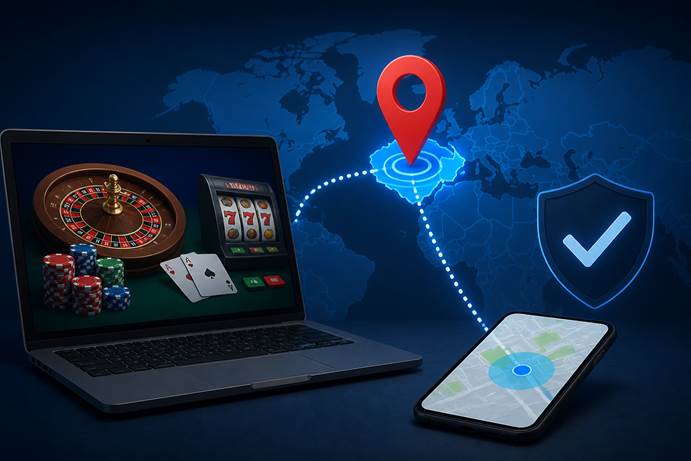
That need comes from a direct clash between physical space and digital access. A device can be used anywhere with a connection, but the right to place a wager does not follow that same freedom. For online casinos, the allowed area and the blocked area are not suggestions, they are hard boundaries. Because of this, the check on a player’s location is less about monitoring behavior, and more about drawing that boundary at the door. If the device falls outside of what is allowed, no login details, no balance, and no history can force it open.
|
Area |
What to know |
|
Context |
That need comes from a direct clash between physical space and digital access. |
|
Consideration |
What makes this sting the most is how easy it is to cross that line by accident. |
|
Practical takeaway |
There is also a matter of timing that people rarely consider. |
Blocking and Places
What makes this sting the most is how easy it is to cross that line by accident. A player could be riding home, connecting through a different network, or simply find themselves just across an invisible divide without even noticing. One minute the games are there, the next the screen refuses to load them. Unlike blocking a feature inside a game, blocking access entirely is a blunt response. Yet it is also the only way for the casinos to act on the split between places where play is allowed and places where it is not, with no room to guess.
There is also a matter of timing that people rarely consider. The location check is not a one-time thing saved from the first day. For a player on the move, the system can only go off of what it sees at that moment. If the player returns to an allowed location later, access may come back just as abruptly as it left. This constant need to verify again and again is what keeps the door tied to the spot, rather than tied to the person. The device may belong to the same player, but the permission belongs to the location.
All: Key Considerations
In the end, all of this comes down to a single point of friction: the place and the platform are not the same thing. Online casinos can exist everywhere their code reaches, but they cannot exist everywhere the right to play exists. For that reason, to check a player’s location is not an extra step of curiosity, but the only way to know if that player should be there at all. For most, the annoyance is real. Still, without that check, there would be no line at all to cross in the first place.