
What if the most dangerous DeFi transaction is the one that appears to succeed? That question exposes a common misunderstanding about transaction simulation. A simulation can show what a proposed transaction is likely to do before it is broadcast, but it cannot turn an uncertain, adversarial system into a predictable one. The practical value lies elsewhere: simulation converts opaque contract instructions into an inspectable outcome, giving the user a chance to detect obvious loss, unexpected approvals, or an unfamiliar recipient before signing.
For users in the United States, this distinction matters across decentralized exchanges, lending markets, liquid staking applications, bridges, and NFT marketplaces. A blockchain transaction is generally irreversible once finalized. The wallet therefore sits at an important decision point: it can help a user examine intent, but it cannot independently establish that a protocol is solvent, honest, well-governed, or immune to future compromise. Good risk assessment begins by separating those questions rather than treating them as one security score.
What a transaction simulation actually does
At a technical level, a simulation executes a proposed transaction against a representation of the blockchain’s current state without submitting it for final inclusion. The proposed call may contain a contract address, method, encoded parameters, and a gas limit. The simulator asks the network’s execution environment what would happen if those instructions ran under specified conditions. The resulting preview may reveal token transfers, approvals, newly received assets, contract errors, or changes to a user’s position.
This is more informative than reading a function name such as swap or deposit. A single user-facing action can cause several internal contract calls. A token approval can grant a spender authority to move assets later, while a swap may involve a router, a liquidity pool, and a fee recipient. Simulation helps surface the economic effects behind that chain of calls. In that sense, it is not merely a convenience feature; it is a translation layer between machine-readable instructions and a user’s financial decision.
The first myth to correct is that a successful simulation means a transaction is safe. It does not. “Successful” usually means that the call did not revert under the simulated state and assumptions. A transaction can execute perfectly while delivering a poor exchange rate, granting an unnecessarily broad approval, sending funds to an unintended address, or interacting with a contract whose administrator can later change critical behavior. Execution success and financial safety are different properties.
The risk model: intent, execution, and protocol exposure
A useful framework divides DeFi risk into three layers. The first is intent risk: did the user understand what was being signed? This includes deceptive interfaces, confusing token symbols, malicious signatures, and approvals that outlive the immediate action. The second is execution risk: will the transaction produce the expected result under current network conditions? Slippage, gas limits, deadlines, price movement, and changing liquidity belong here. The third is protocol risk: is the application itself dependable? Smart-contract bugs, oracle failures, governance actions, bridge dependencies, and economic attacks remain relevant even when the transaction is accurately simulated.
Simulation is strongest against the first two layers, but even there its protection is conditional. If the preview clearly shows that a user will lose a valuable token, receive nothing, or approve a large balance to an unfamiliar spender, it can prevent a costly mistake. It may also identify a transaction that will revert, saving gas and avoiding needless retries. These are substantial benefits because many losses begin with a mismatch between what the user believes they are authorizing and what the contracts actually receive.
However, the simulated state can become stale. A decentralized exchange pool may change between preview and inclusion. Another transaction may consume available liquidity, alter a price, or cause the user’s transaction to fail its minimum-output condition. On a busy Ethereum or Layer 2 network, the delay may be short, but the relevant state can still move. A simulation is therefore best understood as a conditional forecast: “If these inputs and this state remain sufficiently similar, this is the likely result.” It is not a cryptographic promise about the future block.
The same limitation applies to adversarial ordering. In some markets, other participants or automated systems may observe pending transactions and attempt to trade before or around them. Slippage limits reduce the amount of price movement a user accepts, but they do not eliminate execution uncertainty. A preview can show the expected output and permitted range; it cannot guarantee that no one will react to the transaction before it is confirmed.
Comparing practical defenses
Transaction simulation should be compared with other controls rather than treated as a replacement for them. A basic wallet may display raw contract data or rely heavily on the application’s interface. This keeps the software simple, but it places more interpretive burden on the user. A security-oriented wallet can add simulation, address warnings, approval analysis, and clearer asset-difference displays. Those tools improve the decision process, especially for users who interact with several protocols, but they still depend on the quality and freshness of the information being analyzed. A separate block explorer or contract-analysis tool can offer deeper inspection, yet it is slower and may require technical skills that users do not have when making a time-sensitive trade.
These approaches sacrifice different things. Convenience-focused interfaces reduce friction but can hide complexity. Wallet-level warnings are available close to the signature moment, but a warning system may produce false positives or fail to recognize a newly deployed malicious contract. Manual contract review can be rigorous, but it is impractical for every small transaction and cannot fully resolve economic or governance risk. The strongest operational pattern is layered: use simulation for the immediate transaction, verify the application and domain separately, minimize permissions, and size positions so that a single failure is survivable.
For approvals, the distinction is especially important. An approval does not usually transfer tokens immediately; it authorizes a spender to transfer them under specified conditions. That permission may remain active after the intended swap or deposit. A simulation can reveal the spender and the approved amount, but users must still decide whether the allowance is appropriate. Limited approvals generally reduce future exposure compared with unlimited allowances, although they may require additional transactions and gas. Revoking permissions can reduce residual risk, but it is not a substitute for avoiding a malicious approval in the first place.
How to read a simulation without outsourcing judgment
Before signing, a DeFi user should ask four questions. What assets leave the wallet, and what assets return? Which contract or spender receives authority? Are the amounts and minimum outcomes consistent with the user’s intention? What assumptions could change before confirmation? These questions are more durable than memorizing particular warning colors or interface labels.
It is also useful to distinguish an asset delta from a protocol promise. The asset delta describes the immediate movement that the simulated call predicts. A lending protocol may show collateral leaving the wallet and a receipt token arriving. That does not prove the receipt token will retain its value, that withdrawals will remain available, or that the market’s liquidation mechanism will work under stress. In other words, simulation can inspect the transaction boundary while the user’s real exposure extends beyond that boundary.
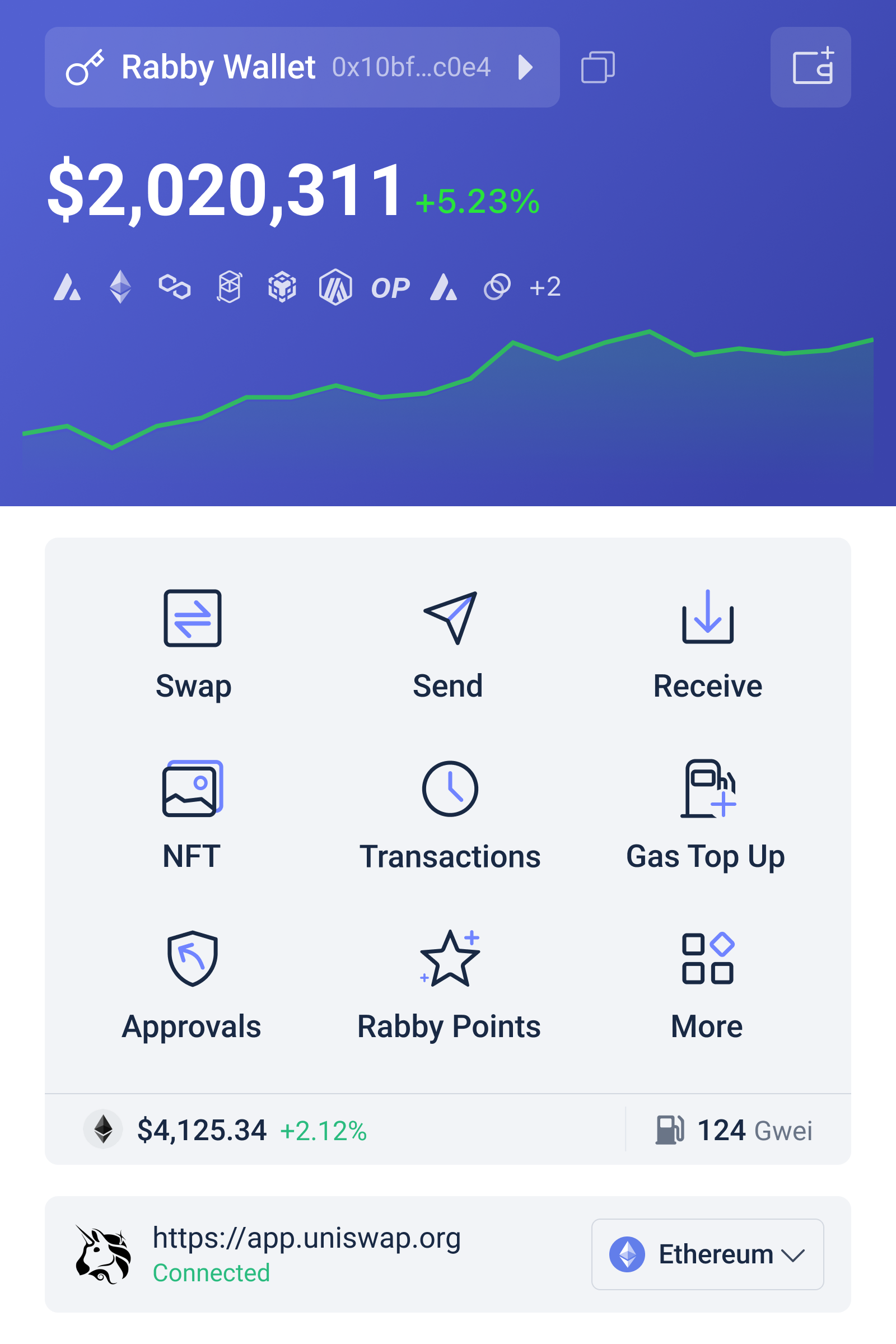
Users seeking an advanced interface can evaluate a rabby wallet as one option for bringing simulation and security-oriented review closer to the signing step. The sensible evaluation criterion is not whether a wallet claims to eliminate risk. It is whether its warnings are understandable, whether expected changes are presented clearly, and whether the user can still inspect the underlying details instead of being encouraged to accept a reassuring summary.
A disciplined workflow is simple but not simplistic. Start with the official application domain and confirm that the connected network is correct. Review the simulated balance changes and every approval. Check the recipient and spender addresses, particularly when copying addresses or using a new bridge. Set slippage and transaction deadlines deliberately rather than accepting unexplained defaults. For unfamiliar protocols, test with a small amount first. Finally, treat a request to sign a message as seriously as a transaction when that signature could authorize an off-chain action or a future transfer.
What to watch as DeFi interfaces mature
The likely direction of wallet design is toward richer, more contextual transaction review: not just “this call succeeded,” but “this action changes these permissions, routes through these contracts, and exposes you to these assumptions.” If such systems become more accurate, they could reduce a major source of retail loss: users approving actions they cannot interpret. The limiting condition is data quality. A wallet may know the immediate token movement while lacking reliable information about upgrade keys, oracle dependencies, liquidity concentration, or governance power.
That suggests a useful boundary for future development. Better simulation can improve transparency and reduce preventable signing errors, but it cannot replace protocol due diligence or economic judgment. The most informative tools will combine execution previews with explicit uncertainty: what was simulated, at what state, which fields may change, and which risks remain outside the preview. Users should watch for that transparency rather than simply for more warning badges.
Frequently asked questions
Does a simulation guarantee that I will receive the displayed amount?
No. The displayed result is conditional on the simulated blockchain state and transaction parameters. Price movement, liquidity changes, transaction ordering, network conditions, or a changed contract state can produce a different outcome. Slippage limits and deadlines provide constraints, not guarantees of execution.
Can transaction simulation detect a malicious DeFi protocol?
It can expose suspicious immediate effects, such as an unexpected transfer or broad token approval, and it may identify a transaction that reverts. It cannot prove that the protocol is trustworthy. A contract may execute exactly as simulated while containing a future exploit, upgrade risk, oracle weakness, or governance danger.
What is the most important habit when using simulation?
Compare the expected asset and permission changes with your actual intention. If the transaction asks for more authority, sends funds to an unfamiliar destination, or produces an outcome you cannot explain, do not sign merely because the simulation reports success.
The central lesson is deliberately modest: simulation is a decision aid, not an insurance policy. It makes the immediate consequences of DeFi actions more legible and catches a class of errors that raw transaction data leaves opaque. Its limits become clear when blockchain state, adversarial ordering, permissions, or protocol design extend beyond the simulated call. Used with those boundaries in mind, it gives users something more valuable than reassurance: a sharper basis for deciding what they are actually willing to authorize.